Abstract
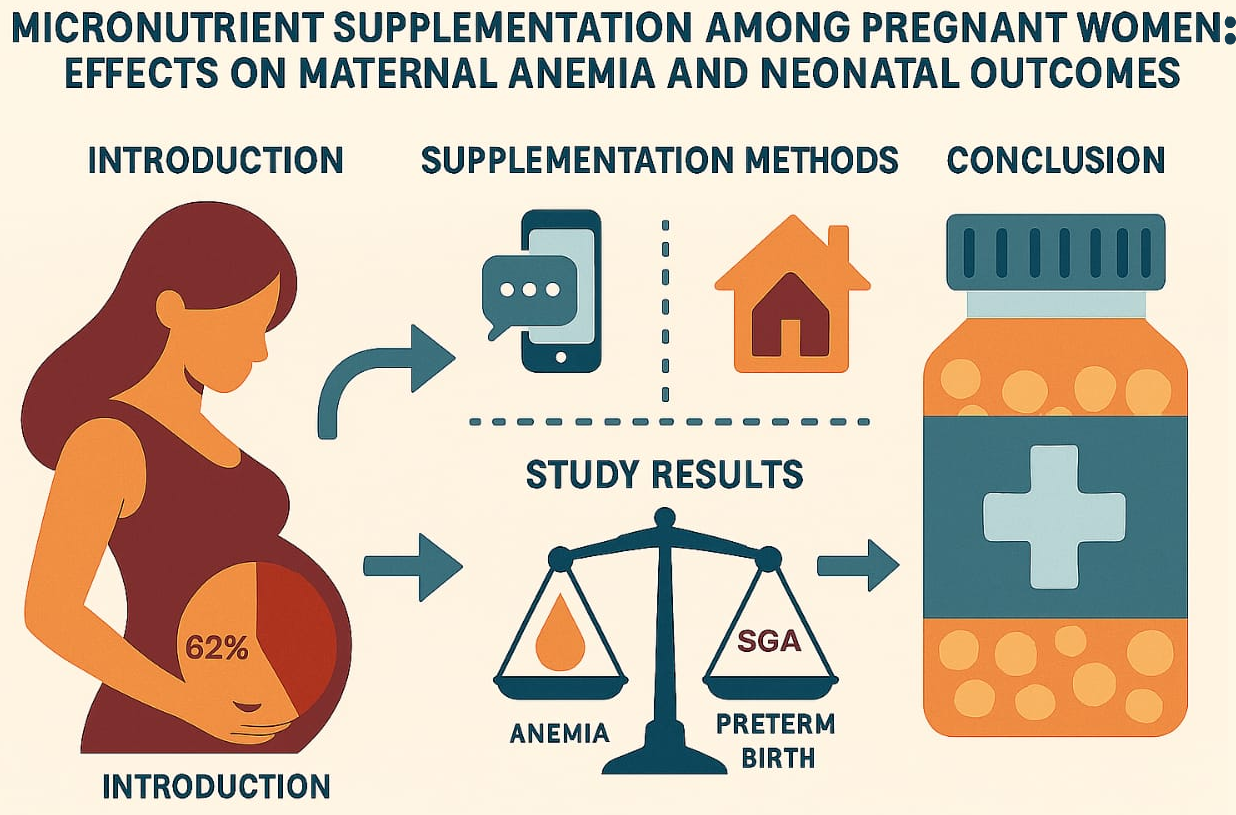
Background: Synonymous with low- and middle-income countries (LMICs), micronutrient deficiencies during pregnancy is a serious public health issue. It is estimated that 38% of pregnant women around the world are anaemic and this is mainly due to iron deficiencies but other risks are posed by poor consumption of folate and vitamin B twelve. These shortcomings are a reason of poor maternal and neonatal outcomes, including preterm birth, low birth weight and fetal growth restriction. Multivitamin minerals (MMS) have been an attractive alternative to the conventional iron and folic acid (IFA) program. Objective: The purpose of this review is to examine barriers to implementation of supplementation programs, and to examine strategies including simulation frameworks, and real time data analytics, to enhance these interventions. Methods: Systematic literature review using scientific databases namely; PubMed, Scopus, and Google Scholar to identify studies targeting clinical subjects published between 2020 and 2025 was conducted. Qualitative thematic analysis approach was used for synthesizing the findings on maternal health, neonatal outcomes, as well as the program implementation challenges. The selected and included studies were based on the PRISMA framework. Results: MMS has been found to offer broader benefits than IFA in that it appears to reduce risks for preterm birth, low birth weight, and small-for-gestational-age, with the benefits accumulated when folate is also fortified. Although IFA continues to be an effective measure for tackling the problem of maternal anaemia and reducing neonatal mortality rates, as evidenced by its proven results in a host of observed cases, the nutritional support it provides is not comprehensive enough, unlike its counterpart MMS. The poor adherence, limited accessibility, socioeconomic barriers, and insufficient education were identified to be multiple barriers for implementation. We suggested strategies including SMS reminders, homebased support, and free provision of supplement. Cost benefit analyses also indicate that MMS would be a viable investment for maternal and child health programs. Conclusions: It is possible to reduce the possibility of improvement in maternal and neonatal health outcomes in LMICs with micronutrient supplementation, particularly with MMS. However, tailored interventions, better education, use of data driven approaches are what are needed to overcome the implementation barriers. The long term impacts and the best time and way of delivering the optimal gestational nutrition need to be studied or refined to achieve maternal and child health global targets.
Graphical Abstract