Abstract
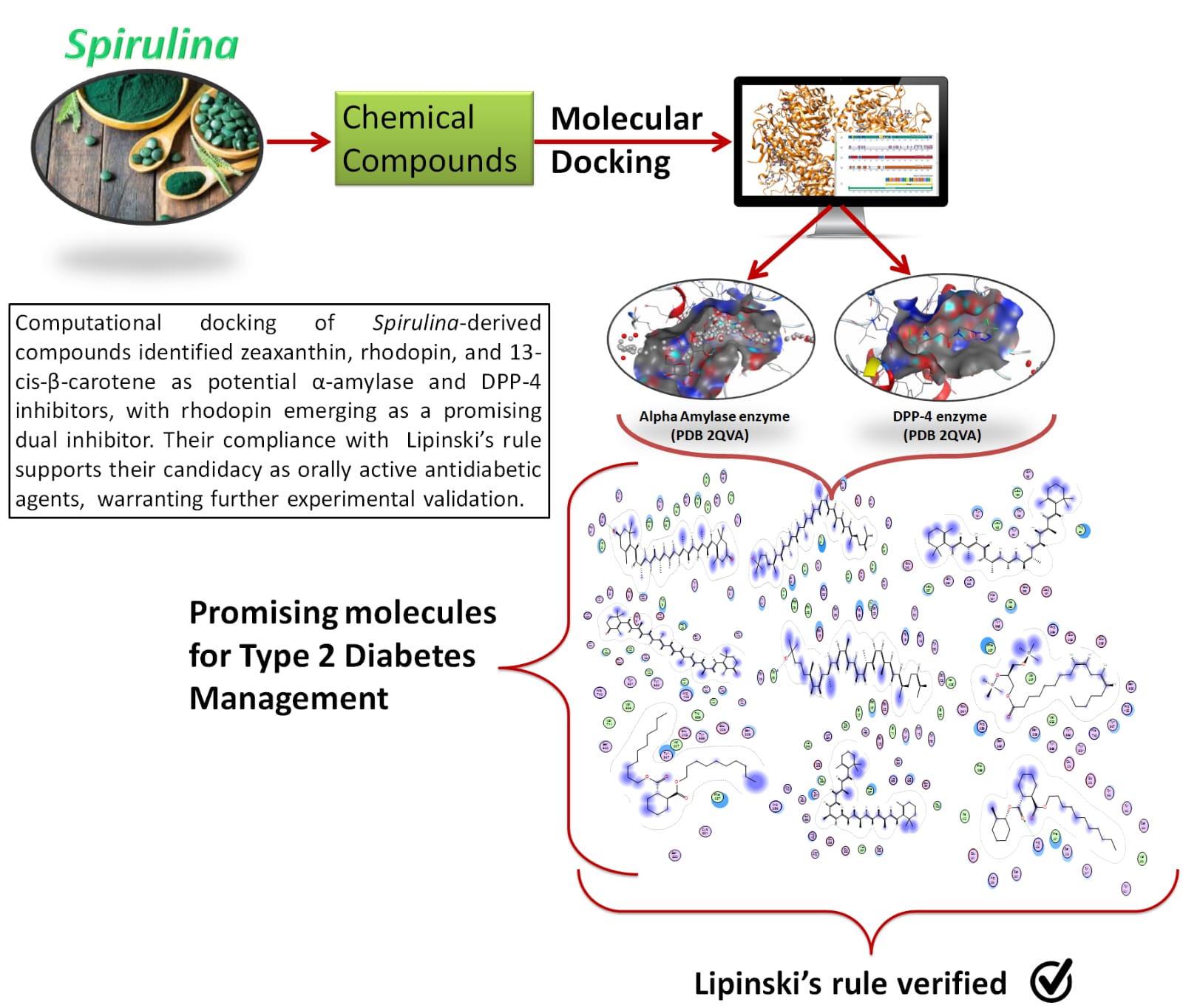
Background: Diabetes is a growing global health concern, necessitating innovative approaches for management and treatment. Globally, type 2 diabetes mellitus (T2DM) has reached epidemic proportions, affecting over 500 million adults in 2021, with projections exceeding 780 million by 2050. The prevalence of T2DM is rising rapidly, particularly in low- and middle-income countries, driven by urbanization, sedentary lifestyles, and dietary changes. This growing burden poses a major public health challenge due to its strong association with cardiovascular disease, kidney failure, and increased mortality. Natural products, particularly plants and herbs, have shown promise in regulating blood glucose levels and improving insulin sensitivity. Spirulina, a blue-green cyanobacterium, has gained attention for its rich nutritional profile and potential health benefits, including possible antidiabetic effects. Purpose: This study aimed to investigate the interaction between Spirulina's chemical compounds and key enzymes involved in type 2 diabetes using computational methods. Research Rationale: Despite some promising studies on Spirulina's antidiabetic effects, research remains scarce, and the mechanisms of action are not fully understood. Computational methods offer an efficient approach to predict potential drug candidates and explore molecular interactions. General Methods: The study employed molecular docking techniques to analyze the interactions between Spirulina compounds and two key enzymes in diabetes management: alpha-amylase and dipeptidyl peptidase-4 (DPP-4). The 3D structures of molecules were obtained from PubChem and ChemSpider databases. Docking simulations were performed using Molecular Operating Environment (MOE) software. Results: Several Spirulina compounds showed higher binding affinities to alphaamylase and DPP-4 compared to reference ligands (established inhibitors). Notably, zeaxanthin, rhodopin, and 13-cis-beta-carotene exhibited strong interactions with both enzymes. The physicochemical properties of these compounds were analyzed using SwissADME, indicating their potential as orally administered drugs. Conclusions: This computational study suggests that certain compounds in Spirulina, particularly carotenoids, may have potential as alpha-amylase and DPP-4 inhibitors. These findings provide a foundation for further in-depth studies on Spirulina's role in diabetes management and highlight the potential of natural products in developing novel antidiabetic treatments.
Graphical Abstract