Abstract
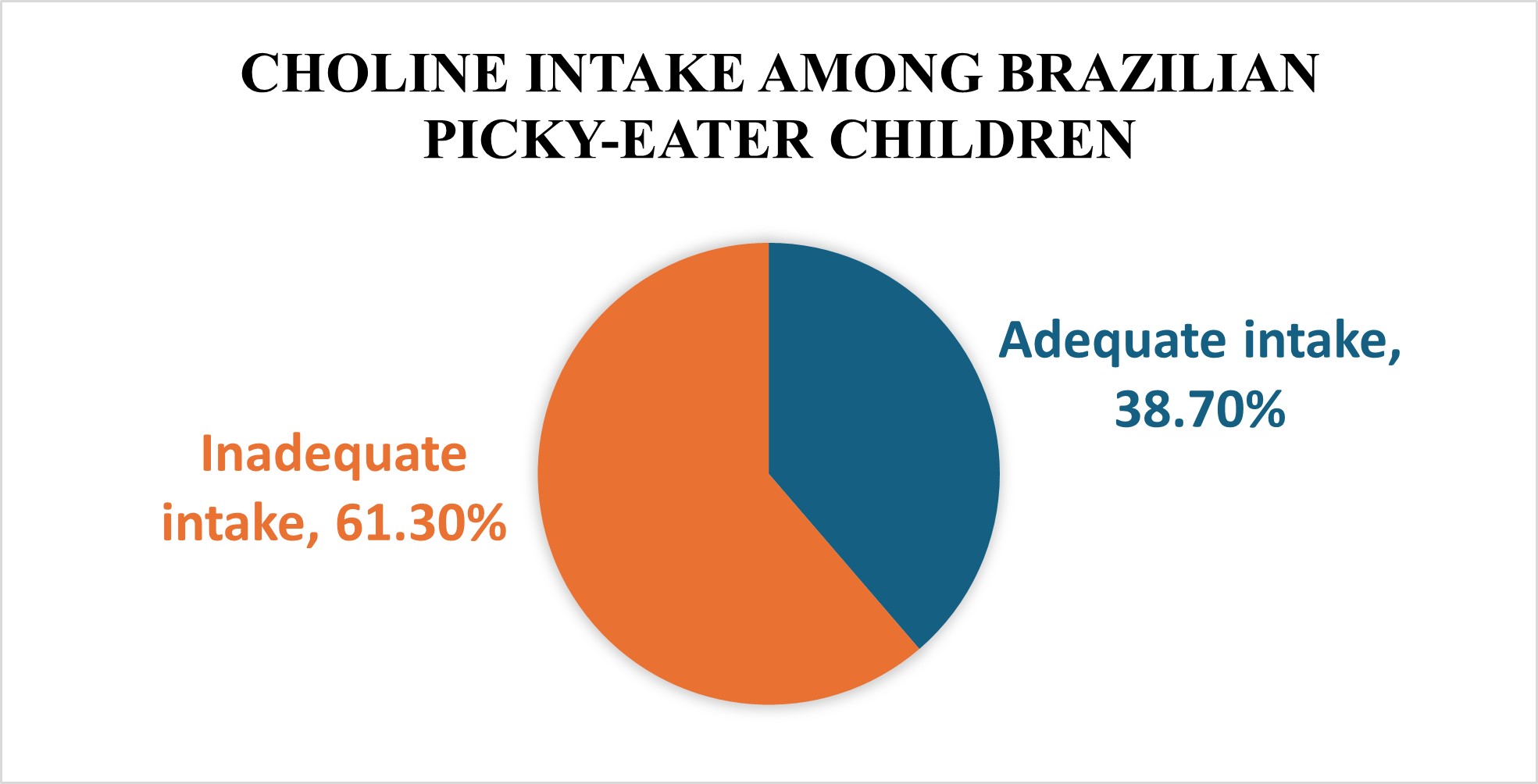
Introduction: Choline is a phospholipid component, considered by the Institute of Medicine (IOM), since 1998, as an indispensable nutrient for human beings. After ingestion, free choline is absorbed by the intestinal epithelium by carrier-mediated transport and accumulates in all tissues. In children, low choline levels are related to impairments in synaptic transmission, synaptic plasticity and learning processes, damage to the neuronal membrane, communication and visual-motor deficits and lower academic performance. Objective: To evaluate choline and betaine intake in a sample of Brazilian picky eaters aged between 2 and 5 years. Methods: This an observational cross-sectional study included 62 children classified as picky eaters, assessed during their first visit to a pediatric clinic in Ribeirão Preto, Brazil. Dietary intake was evaluated using a 24-hour dietary recall. Choline and betaine intakes were analyzed using nutrition analysis software, supplemented with data from the USDA food composition database. Choline intake adequacy was determined based on the Dietary Reference Intakes. Results: Median choline intake was 177.2 mg/day (IQR: 116.7–261.2), while betaine intake reached a median of 18.5 mg/day (IQR: 10.9–36.1). Choline intake was below the Adequate Intake (AI) in 61.3% (n=38) of the participants. No dietary reference values are established for betaine intake. Anthropometric z-scores indicated a sample with preserved nutritional status. Conclusion: Brazilian picky eater children have reduced choline intake and this fact can lead to the consequences that have been observed by the deficiency of this nutrient, especially negative repercussions for neurodevelopm.
Graphical Abstract