Abstract
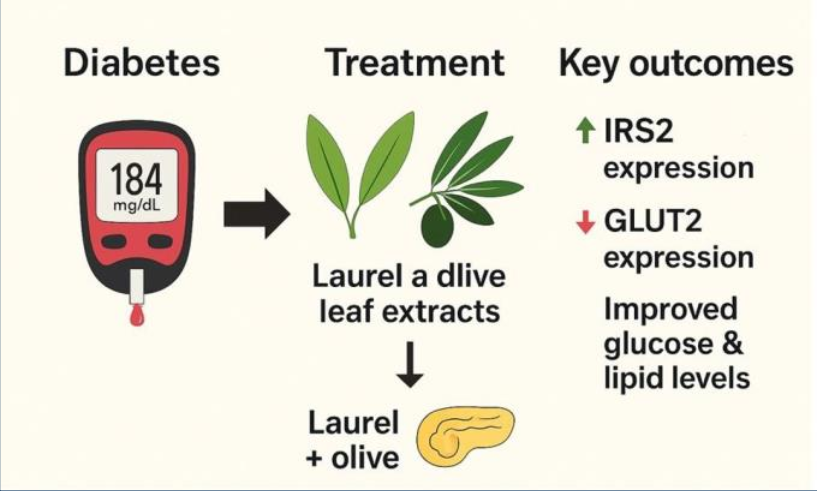
Globally, an estimated 589 million adults aged 20–79 are living with diabetes in 2025, a number projected to reach 853 million by 2050. Diabetes mellitus (DM) is a chronic condition marked by persistent hyperglycemia due to impaired insulin secretion or action, which increase the risk of vascular complications. Developing effective treatments for DM remains a pressing challenge. This study evaluated the anti-diabetic and antioxidant effects of laurel and olive leaf extracts in streptozotocin (STZ)-induced diabetic rat models. Fifty male rats (8–10 weeks old, 180 ± 20 g) were allocated into five groups: Control, Diabetic, Diabetic + Laurel, Diabetic + Olive (Olea europaea), and Diabetic + Laurel and Olive. Gene expression of glucose transporter GLUT2 and insulin receptor substrate-2 IRS2, fasting blood glucose, insulin levels, lipid profiles, liver and kidney function markers, nitric oxide, and catalase (CAT) activity were assessed. Histopathological analysis of pancreatic tissues was also performed. After 28 days, all treated groups exhibited a significant increase in IRS2 and a decrease in GLUT2 expression compared to the diabetic group. Treatment improved glucose levels, lipid profiles, and liver and kidney function markers, with the most notable effects observed in the combined Laurel and Olive group. Nitric oxide levels significantly declined, while CAT activity increased in treated groups. Histopathology revealed substantial pancreatic restoration in the combined treatment group, closely resembling the control group. These results demonstrate that Laurel and olive leaf extracts, particularly in combination, effectively manage diabetes and oxidative stress, offering potential therapeutic benefits for DM management.
Graphical Abstract