Abstract
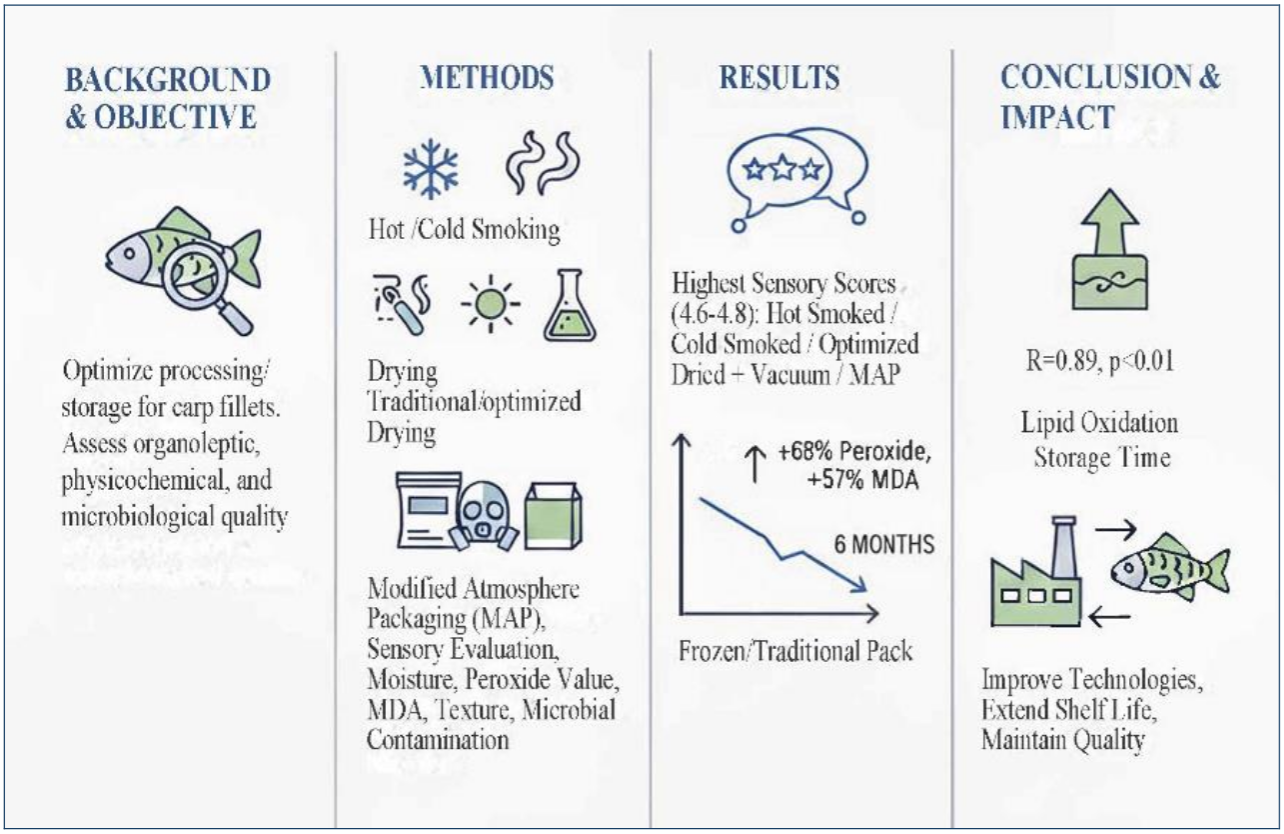
Background: With global fish production exceeding 178 million tonnes and up to 35% lost to spoilage, improving processing and storage is vital to maintain quality. Freshwater species like carp, rich in moisture and unstable fats, rapidly deteriorate during storage, demanding precise preservation methods. Objective: The study aimed to determine the effect of processing methods and storage conditions on the organoleptic, physicochemical, and microbiological quality of carp products. The subject of the study was carp fillets that were subjected to freezing, hot and cold smoking, and traditional and optimised drying. Methods: After processing, the samples were stored in three types of packaging: vacuum, modified atmosphere (gas mixture), and traditional (polyethylene and paper). The organoleptic evaluation was conducted by qualified and certified sensory panellists following the international standard and additionally determined moisture content, peroxide number, malondialdehyde content, texture hardness and total microbial contamination. Results: The highest sensory scores (4.6-4.8 points) were achieved by meat processed by hot smoking or optimised drying and packaged in a vacuum or modified atmosphere. The frozen meat gradually lost its texture and flavour properties, and after six months in traditional packaging the sensory score dropped to 2.5-2.8 points. At the same time, the peroxide number increased by 68% on average and the malondialdehyde content by 57%. Conclusions: A strong positive correlation between the storage time and the level of lipid oxidation was recorded (correlation coefficient of 0.89 with a significance level of less than 0.01). The results of the study can be used to improve the technologies of processing and packaging freshwater fish in production conditions to extend the shelf life without loss of quality.
Graphical Abstract