Abstract
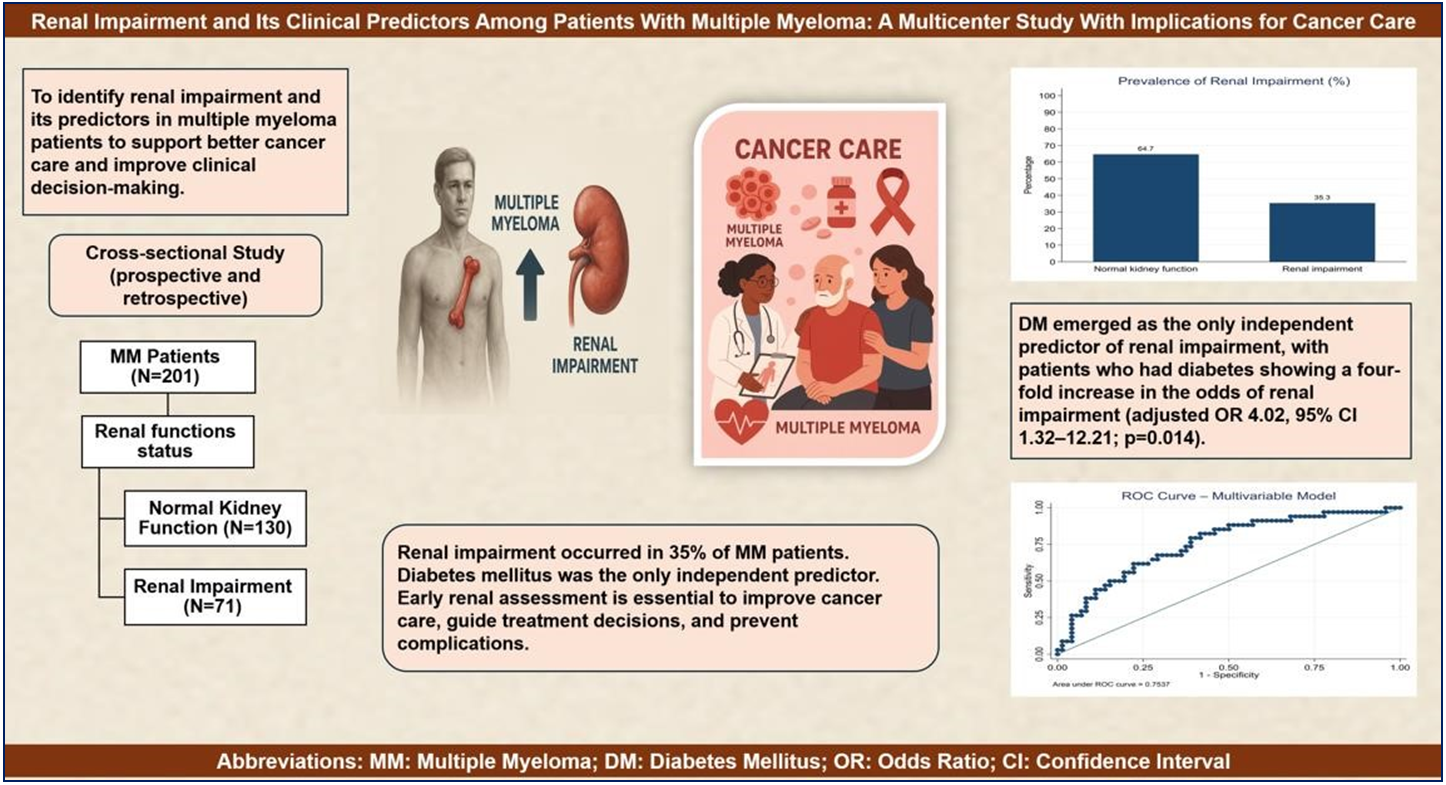
Introduction: Renal impairment is a frequent and clinically significant complication of multiple myeloma (MM), influencing treatment choices, toxicity risk, and survival. Evidence from Middle Eastern populations remains limited. Objective: This study assessed the prevalence of renal impairment among MM patients and examined clinical and laboratory predictors associated with kidney dysfunction. Methods: A cross-sectional study was conducted across major hospitals in the West Bank from 2018 to 2025, including 201 adults with confirmed MM. Demographic, clinical, and laboratory data were collected through retrospective chart review. Renal impairment was defined using sex-specific creatinine thresholds. Univariable and multivariable logistic regression analyses were performed to identify independent predictors. Results: Renal impairment was present in 35.3% of patients. Those with impaired kidney function had higher median uric acid, calcium, and inflammatory marker levels and slightly lower albumin levels, although these differences did not remain significant after adjustment. In the multivariable model, diabetes mellitus was the only independent predictor of renal impairment (adjusted OR 4.02; p=0.014). Model performance was acceptable, with an AUC of 0.75. Conclusion: Renal impairment is common among MM patients, and diabetes substantially increases the risk. Routine renal monitoring and aggressive management of metabolic comorbidities, particularly diabetes, may improve kidney outcomes and support better overall care.
Graphical Abstract