Abstract
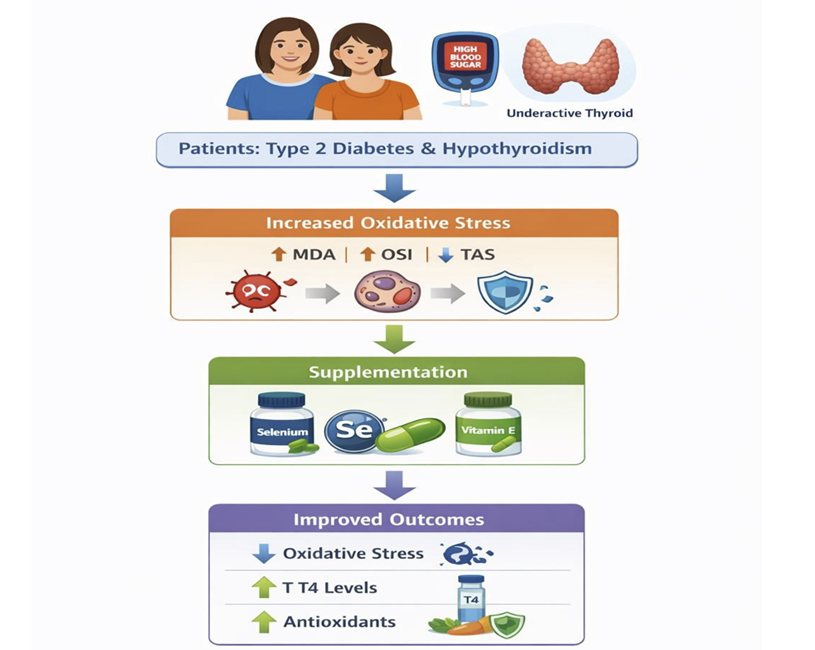
Background: Hypothyroidism and type 2 diabetes are common conditions worldwide, with hypothyroidism affecting 4–10% of the population and type 2 diabetes affecting approximately 10% of adults globally. The increasing co-occurrence of these two conditions may contribute to increased oxidative stress and associated complications. Low levels of antioxidants are linked to hypothyroidism with type II diabetes because of the growth and production of free radicals, which makes patients more susceptible to oxidative stress. Objective: It was to assess how low antioxidants may exacerbate the pathogenic state of type 2 diabetic hypothyroid patients. Methods: 140 hypothyroid individuals with type 2 diabetes, ages 25 to 60, were assigned to take supplements every day with either intervention group before Eltroxin,( n = 50) (intervention group after Eltroxin, n=50) ( placebo group, n=40) for twelve weeks, take two capsules of vitamin E (268 mg, 400 IU), and one pill of selenium (200 mcg). Serum malondialdehyde (MDA), total antioxidant status (TAS), glycated haemoglobin (HbA1c), and fasting serum glucose (FSG) were measured using laboratory kits. Meanwhile, thyroid hormones were measured using (ELISA) technique. Estimates of selenium) Se) and vitamin E were obtained using atomic absorption spectroscopy and high-performance liquid chromatography (HPLC), respectively. Results: The levels of MDA, TAS, thyroid stimulating hormone (TSH), triiodothyronine (T3), thyroxine (T4), FSG, HbA1c, and oxidative stress index (OSI) did not differ significantly (p>0.05) between the patient group and placebo participants, according to this study. Vit E and Se levels in the placebo group are not markedly distinct from those in the sick team (p>0.05). Increased degrees of MDA, TAS, OSI, and TSH noticeably (p<0.05) were observed in the placebo group. After taking the medicine, the T4 level was lower noticeably (p<0.05 than that of the patients after taking the medicine. Conclusion: Individuals with hypothyroidism with type 2 diabetes may prevent hypothyroidism by consuming dietary supplements containing antioxidants, which reduce oxidative stress and promote overall health.
Graphical Abstract