Abstract
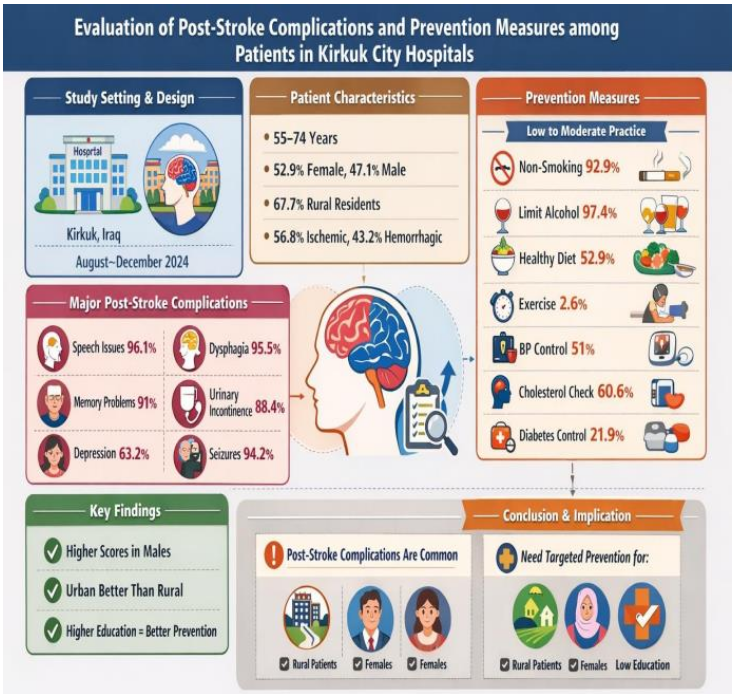
Stroke is one of the leading causes of mortality and long-term disability worldwide, accounting for millions of new cases annually and representing a major global health burden. Post-stroke complications may significantly impede recovery and increase the risk of death. This study aimed to evaluate post-stroke complications and preventive measures among patients in hospitals in Kirkuk City. A descriptive cross-sectional study was conducted at Azadi Teaching Hospital in Kirkuk City. A total of 155 patients were randomly selected. Data were analyzed to assess differences in post-stroke complication prevention scores according to gender, residence, and educational level. The findings showed that prevention scores varied significantly by gender and area of residence. Male patients demonstrated higher average ranks compared to females. Similarly, urban participants achieved better preventive evaluation scores than rural patients. Educational level was also significantly associated with prevention measures. The study concluded that demographic factors influence post-stroke prevention outcomes. These findings highlight the importance of targeted educational and preventive strategies. Further large-scale cohort studies are recommended.
Graphical abstract