Abstract
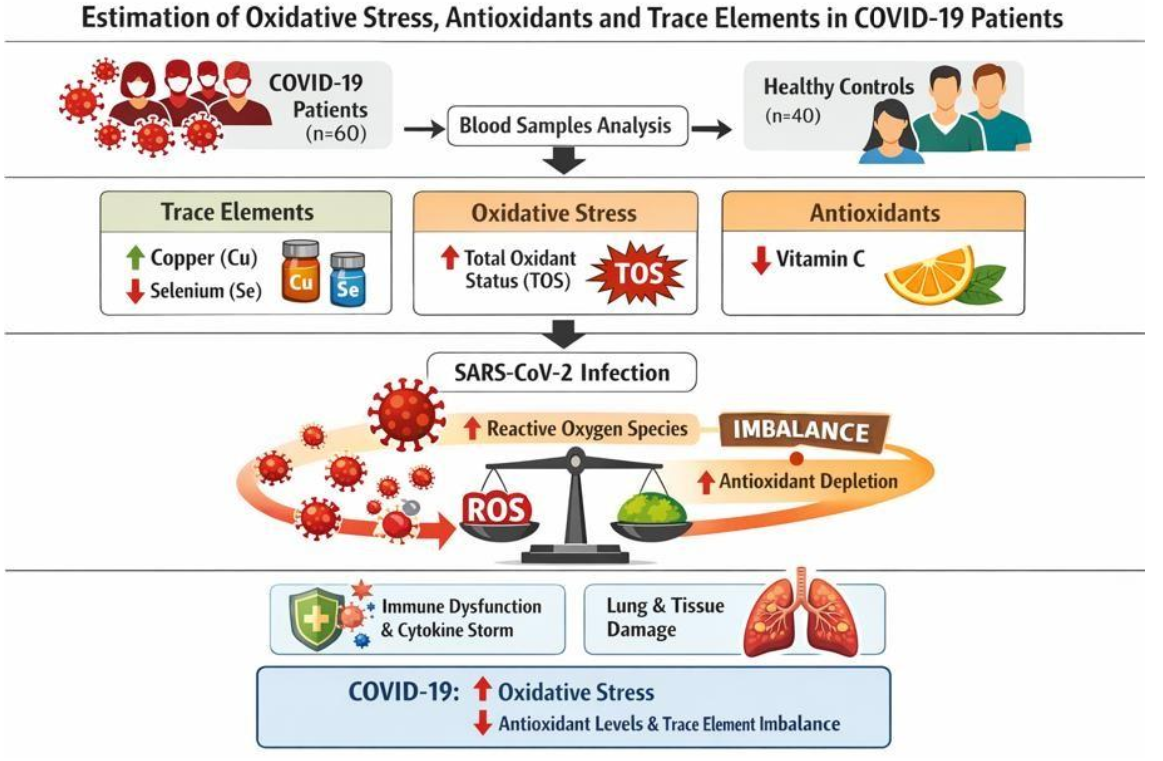
Introduction: The World Health Organization announced coronavirus-disease 2019 (COVID-19) to be a global pandemic. Recently oxidative stress has implicated in the pathogenesis of COVID-19. The buildup of free radicals together with the inability of the antioxidant system to counterbalance the free radicals produces oxidative stress which ultimately exacerbate respiratory diseases including COVID-19. Objective: This was a study to explore the impact of corona virus 2019 (COVID-19) on blood oxidants and antioxidants. Methods: A total of blood samples were taken from (60) patients infected with COVID-19 and 40 volunteers as a control group. Results: The Copper levels that show a significant increase of Copper levels in the COVID-19 patients compared to the healthy subjects, and Selenium levels show a significant decrease of Selenium levels for the COVID-19 patients compared to the healthy subjects, and total oxidant levels show a very high significant increase of COVID-19 patients compared to the healthy subjects, and Vitamin C levels show a significant decrease of Vitamin C levels for the COVID-19 patients compared to the healthy subjects. Conclusion, in COVID-19 positive patients, the levels of the antioxidant substances are decreased as they are progressively consumed to balance the injurious effect of the free radicals.
Graphical Abstract