Abstract
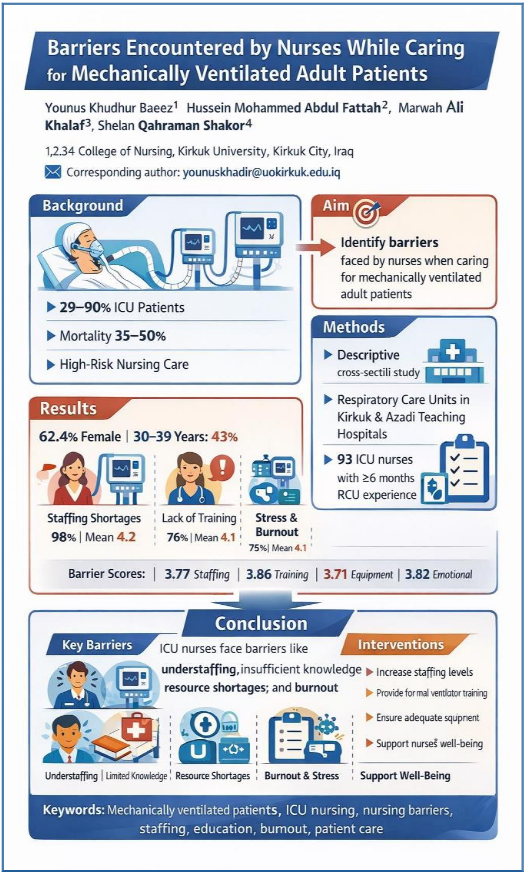
Introduction: Mechanical ventilation (MV) is a critical and frequently used intervention in intensive care units (ICUs), with up to 70% of ICU patients requiring it. The rates of invasive mechanical ventilation range from 29.1% to nearly 90% in some studies, particularly during the COVID-19 pandemic, with associated mortality rates exceeding 35% to 50%. Providing care for mechanically ventilated adult patients is a complex and high-risk nursing responsibility. Objective: This study aimed to identify the primary barriers encountered by nurses when caring for mechanically ventilated adult patients and to examine how these barriers relate to their demographic and professional characteristics. Methods: A descriptive cross-sectional study was conducted in the Respiratory Care Units (RCUs) of Kirkuk and Azadi Teaching Hospitals to identify barriers encountered by ICU nurses caring for mechanically ventilated adult patients. The study included 93 nurses with at least six months of RCU experience, recruited using a convenience sampling technique. Sample size adequacy was justified using a single-proportion formula at 95% confidence and 5% margin of error. Data were collected via a structured, self-administered questionnaire covering demographics, staffing/ workload, knowledge/training, equipment/ resources, and communication/emotional barriers, measured on a 5-point Likert scale. The questionnaire was validated by experts and piloted (Cronbach’s alpha = 0.87). Ethical approval was obtained, and participants provided informed consent with confidentiality ensured. Data were analyzed using SPSS 26.0, employing descriptive statistics, t-tests, and ANOVA, with p < 0.05 considered statistically significant. Results: The majority of participants were female (62.4%) and aged 30–39 years (43.0%). The most prominent barriers identified were staffing shortages (mean = 4.2), lack of formal ventilator training (mean = 4.1), stress and burnout (mean = 4.1), and equipment shortages (mean = 3.9). Overall mean scores for staffing/workload, knowledge/training, equipment/resources, and communication/ emotional barriers were 3.77, 3.86, 3.71, and 3.82, respectively. No statistically significant relationships were observed between demographic variables and perceived barriers (p > 0.05). Conclusion: ICU nurses face multiple, interconnected barriers when caring for mechanically ventilated adult patients, including inadequate staffing, insufficient knowledge, limited availability of equipment, and work-related psychological stress. Organizational interventions such as improving staffing levels, providing formal training, ensuring resource availability, and supporting nurses’ well-being are essential to enhance the quality of patient care.
Graphical abstract