Abstract
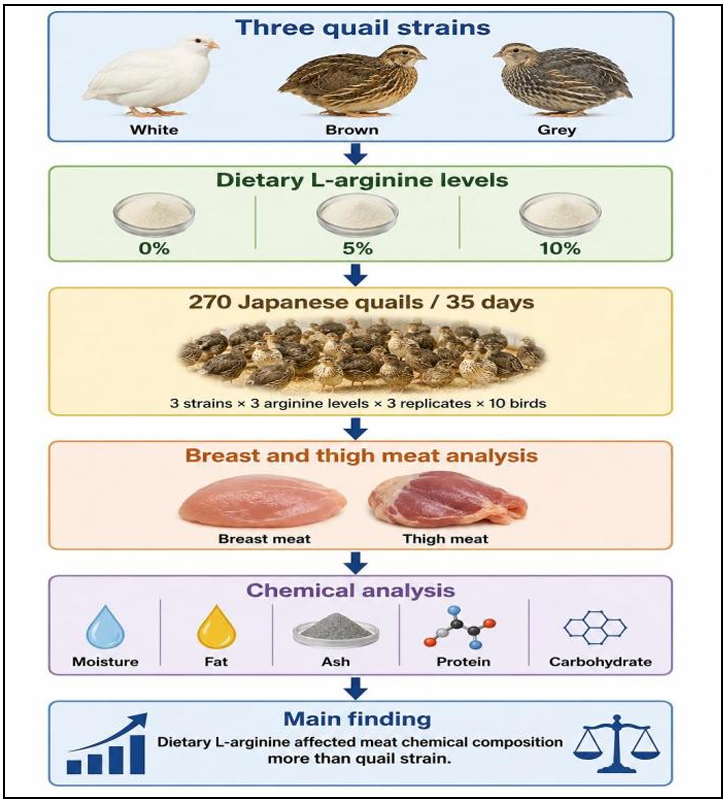
This study was conducted to evaluate the interactive effects of quail strain and dietary L-arginine levels on the chemical composition of breast and thigh meat. A total of 270 one-day-old Japanese quail chicks from three strains (white, brown, and grey) were randomly assigned to a 3×3 factorial experimental design. The birds were fed diets supplemented with three levels of L-arginine (0%, 5%, and 10%) for a period of 35 days. The results indicated that dietary L-arginine significantly influenced the chemical composition of the meat. In breast meat, the 10% arginine group showed a significantly higher fat content (1.977%) compared to the 0% and 5% groups. Ash and carbohydrate contents in the breast were also significantly affected by arginine levels (p≤0.05). In thigh meat, the 5% arginine level resulted in the highest protein content (25.542%), while the 10% level was associated with the highest fat (19.401%) and ash (0.43%) contents. In contrast, the quail strain did not significantly affect the chemical features of either breast or thigh meat, including moisture, fat, ash, protein, and carbohydrate levels. These findings suggest that nutritional intervention through arginine supplementation is a more dominant factor in determining meat quality than genetic strain under uniform environmental conditions. The study concludes that optimizing arginine levels, specifically at moderate concentrations, is essential for enhancing the nutritional value and production efficiency of Japanese quail.
Graphical Abstract