Abstract
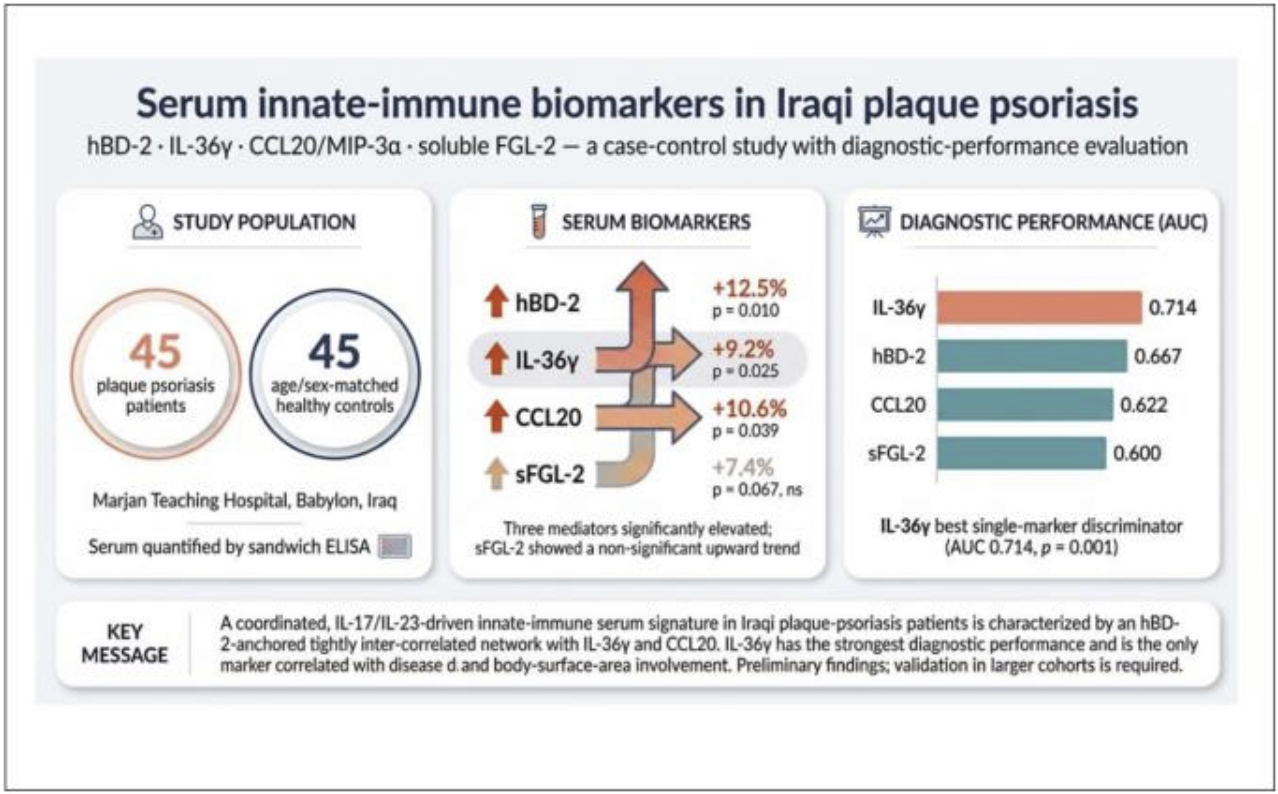
Introduction: Plaque psoriasis is driven by an IL-23/IL-17–centred axis in which keratinocyte-derived innate mediators amplify and sustain cutaneous inflammation. Circulating biomarkers that capture this axis in Iraqi patients are poorly characterised. Objective: To compare serum human β-defensin-2 (hBD-2), interleukin-36γ (IL-36γ), CCL20/MIP-3α, and soluble fibrinogen-like protein 2 (sFGL-2) between adults with plaque psoriasis and matched healthy controls, and to evaluate their diagnostic performance. Methods: This case–control study enrolled 45 patients with clinically diagnosed plaque psoriasis and 45 age- and sex-matched healthy controls at Marjan Teaching Hospital, Babylon Governorate, Iraq (October 2025 – March 2026). Serum biomarkers were quantified by sandwich ELISA. Group comparisons, Pearson correlation, ROC analysis, and logistic regression were performed. Results: hBD-2, IL-36γ, and CCL20 were significantly higher in patients than controls (all p < 0.05); sFGL-2 showed a non-significant trend. Strong positive correlations were observed between hBD-2 and the other three mediators. IL-36γ had the best diagnostic performance (AUC = 0.714, p = 0.001). All four biomarkers were associated with psoriasis in univariate logistic regression, with attenuation in multivariable models consistent with shared pathway regulation. Conclusion: A coordinated innate-immune serum signature is present in Iraqi plaque-psoriasis patients; IL-36γ showed the most promising diagnostic utility, although these findings are hypothesis-generating and require validation before clinical use.
Graphical Abstract