Abstract
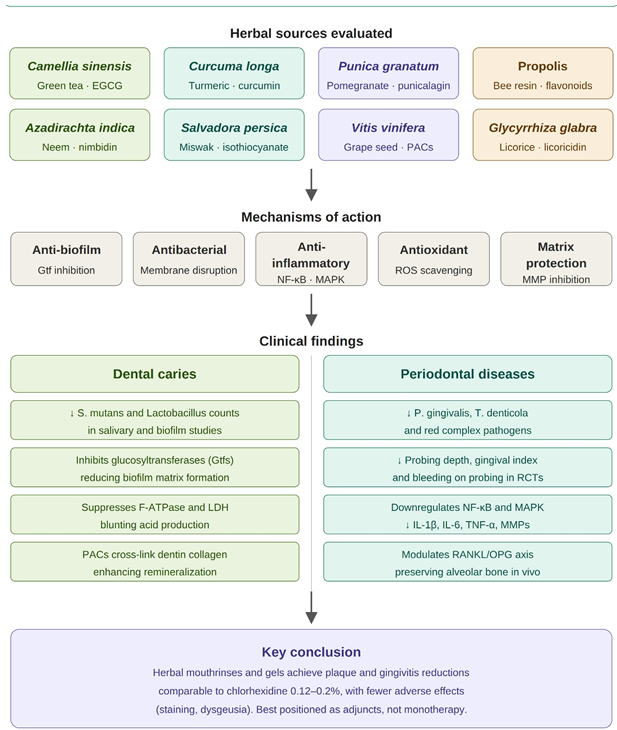
Introduction: Dental caries and periodontal diseases remain two of the most prevalent chronic non-communicable conditions worldwide, with substantial impact on systemic health and public health expenditure. Although fluoride, mechanical biofilm control, and chlorhexidine remain cornerstones of prevention, concerns regarding antimicrobial resistance, dysbiosis, staining, and altered taste have stimulated interest in herbal bioactive compounds as complementary agents. Objective: To critically synthesize current evidence on the role of herbal bioactive compounds, including polyphenols, flavonoids, terpenoids, alkaloids, and essential oils — in the prevention of dental caries and periodontal diseases, with attention to mechanisms of action, clinical efficacy, safety, and translational nutrological perspectives. Methods: A structured narrative review was conducted using PubMed/MEDLINE, Scopus, Web of Science, and the Cochrane Library covering literature published between January 2000 and December 2025. In vitro studies, animal experiments, randomized controlled trials, systematic reviews, and meta-analyses published in English were eligible. Results: Multiple herbal bioactives demonstrate antibacterial, antibiofilm, anti-inflammatory, antioxidant, and matrix-stabilizing properties relevant to oral disease prevention. Camellia sinensis catechins (especially EGCG), curcumin, propolis flavonoids, pomegranate ellagitannins, grape-seed proanthocyanidins, Salvadora persica derivatives, Azadirachta indica extracts, aloe vera polysaccharides, and Glycyrrhiza glabra isoflavans show consistent activity against key cariogenic and periodontal pathogens. Clinical trials suggest that herbal mouthrinses, gels, and dentifrices achieve plaque and gingivitis reductions comparable to chlorhexidine, with fewer adverse effects. Conclusion: Herbal bioactive compounds represent a scientifically promising adjunct to conventional oral preventive strategies. However, methodological heterogeneity, lack of standardized formulations, and limited long-term safety data preclude their unqualified recommendation as monotherapies. Future research should prioritize adequately powered randomized controlled trials with standardized phytochemical preparations and integration with nutrological frameworks.
Graphical Abstract