Abstract
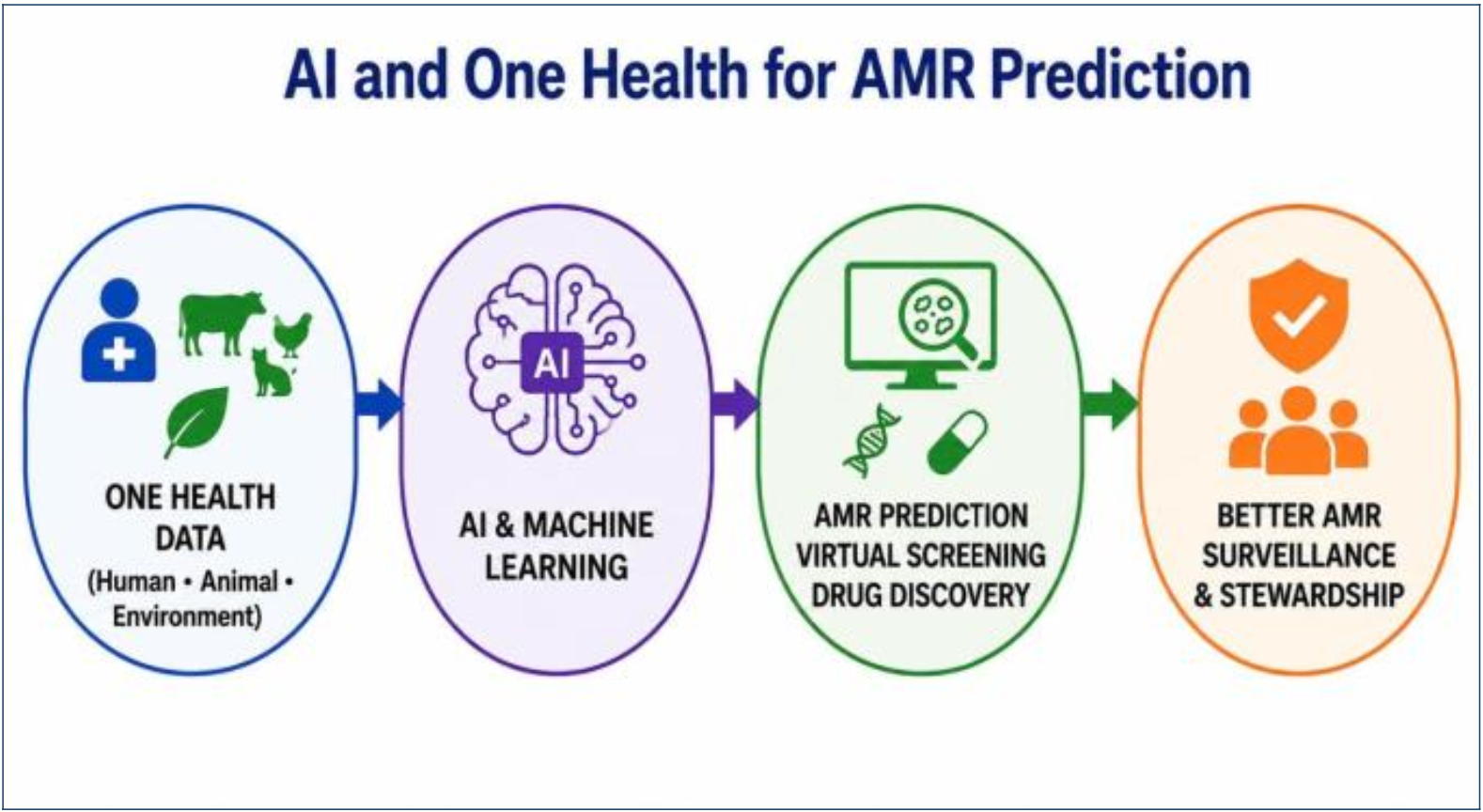
Introduction: Antimicrobial resistance (AMR) has become a global health threat affecting human, animal, and environmental health. Artificial intelligence (AI) techniques, including machine learning (ML) and deep learning, have demonstrated significant potential in enhancing antimicrobial resistance prediction, antimicrobial discovery, and One Health surveillance systems. Objective: The purpose of this review was to evaluate the use of artificial intelligence and One Health approaches in virtual screening, antimicrobial resistance prediction, and antimicrobial stewardship, and to explore their potential applications in global antimicrobial resistance management. Methods: A narrative review was conducted on recent literature covering the application of AI in antimicrobial resistance prediction, drug discovery, machine learning algorithms, and One Health surveillance systems. Clinical, veterinary, environmental, and public health studies relevant to the topic were reviewed and synthesized. Results: The available evidence showed that AI can enhance resistance prediction, identify resistance-associated mutations, facilitate virtual screening of antimicrobial compounds, and support the discovery of novel therapeutic agents. AI models can also integrate clinical, veterinary, genomic, and environmental data, strengthening One Health surveillance and antimicrobial stewardship efforts. However, data quality, transparency, ethical considerations, and interoperability remain significant challenges. Conclusion: AI has the potential to be a powerful tool in combating antimicrobial resistance within a One Health framework. To fully realize the benefits of AI for antimicrobial resistance prediction, antimicrobial discovery, and global surveillance programs, improved data integration, ethical governance, and interdisciplinary collaboration are essential.
Graphical Abstract