Abstract
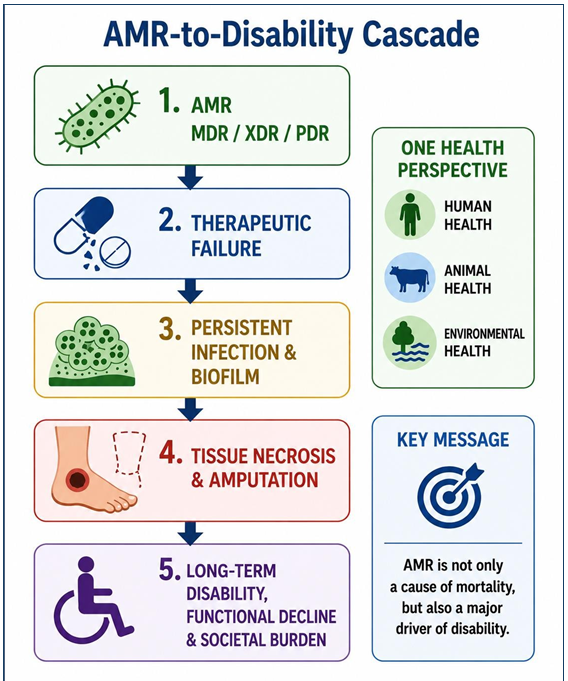
Introduction: Antimicrobial resistance (AMR) has become one of the greatest challenges of the 21st century to global health. The impact of AMR is usually assessed in terms of morbidity, mortality, and cost of health care, but irreversible disability is significantly underrecognized. Multidrug-resistant (MDR) pathogens, extensively drug-resistant (XDR) and especially pandrug-resistant (PDR) pathogens often cause therapeutic failure, chronic infection, progressive destruction of tissue and permanent impairment in function. Objective: The objective of this review was to reframe AMR in a disability-focused and One Health perspective, by examining the link between resistant infections and amputation, long term functional decline, and disability. Methods: A narrative integrative review was performed with recent literature from clinical, microbiology, public health and One Health publications. The review is targeted at high-risk infections such as diabetic foot infections, infections associated with trauma, burn wounds, osteomyelitis and chronic soft tissue infections. Results: Available data has shown that there exists a link between resistant infections and delayed effective therapy, chronic infection with biofilm, necrosis of tissue, recurrence of surgical intervention and loss of the limb. PDR pathogens mark the ultimate point of therapeutic exhaustion of antimicrobial agents—often the last resort is surgical containment. The burden of disability due to AMR is especially high in LMICs due to delayed diagnosis, poor antimicrobial stewardship, limited access to newer antimicrobials, and lack of adequate rehabilitation services. Conclusion: AMR should no longer be considered solely a cause of death, but also as a leading cause of irreversible disability and long-term burden on society. The inclusion of disability prevention, functional preservation, rehabilitation and One Health in AMR frameworks is essential to future global strategies for health.
Graphical Abstract