Abstract
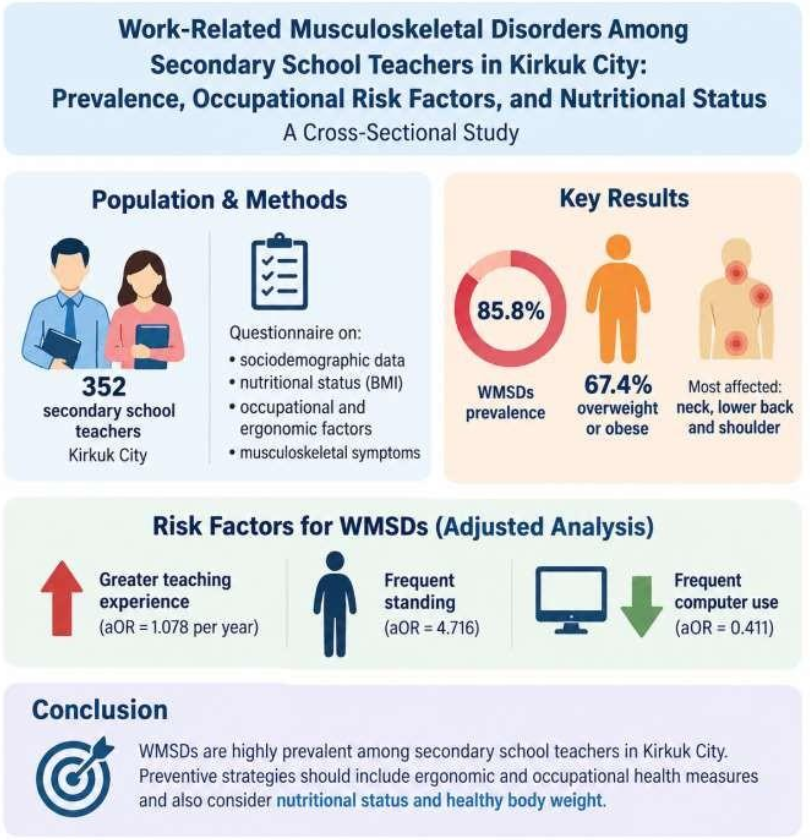
Introduction: Work-related musculoskeletal disorders (WMSDs) represent a major occupational health concern among teachers globally; however, evidence from Iraq remains limited. This study aimed to estimate the 12-month prevalence of WMSDs and determine the occupational, ergonomic, and nutritional-status-related factors associated with these disorders among secondary school teachers in Kirkuk City. Methods: A cross-sectional descriptive-analytical study was conducted among 352 teachers working in public secondary schools in Kirkuk City. Data were obtained through a structured, self-administered questionnaire assessing socio-demographic characteristics, and anthropometric and nutritional status indicators, occupational and ergonomic factors, musculoskeletal symptoms affecting nine anatomical regions. Statistical analysis was performed using SPSS version 27. Associations were examined using the Mann-Whitney U test, chi-square or Fisher's exact test, and multivariable binary logistic regression. Statistical significance was established at p<0.05. Results: The overall 12-month prevalence of WMSDs was 85.8%. Overall, 67.4% of teachers were overweight or obese. The neck (69.3%), lower back (65.1%), and shoulder (64.8%) were the most frequently affected anatomical regions. Female teachers had a significantly higher prevalence than male teachers (91.0% vs 81.6%, p=0.012). In the adjusted regression model, greater teaching experience (aOR=1.078 per year) and frequent standing during teaching (aOR=4.716) were independently associated with higher odds of WMSDs. In contrast, frequent computer use was associated with reduced odds (aOR = 0.411). Despite the high prevalence of symptoms, only 43.7% of affected teachers sought medical care, and 23.6% had received ergonomic training. Conclusion: WMSDs are highly prevalent among secondary school teachers in Kirkuk City, with women experiencing a disproportionate burden. The findings suggest that cumulative occupational exposure and prolonged standing are important contributors to WMSDs, highlighting the need for improved ergonomic training and occupational health support and integrated health-promotion strategies that also consider nutritional status and healthy body weight within the education sector.
Graphical Abstract