Abstract
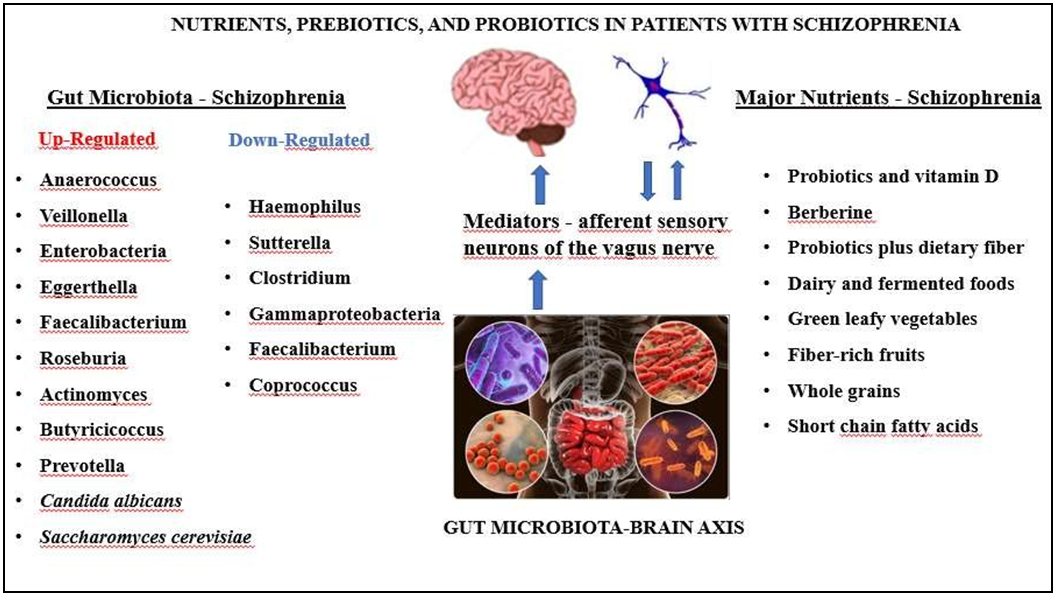
Introduction: Schizophrenia (SZ) affects approximately 20 million individuals worldwide. The gut microbiota (GM) plays a fundamental role. Objective: It was to present, through a meta-analysis, the main considerations and outcomes of clinical studies on the relationship between the gut microbiota-brain axis in patients with schizophrenia, as well as to highlight the effects of nutrients, prebiotics, and probiotics for the improvement of symptoms of schizophrenia. Methods: The PRISMA rules for meta-analysis were followed. The research was carried out from November 2024 to January 2025 in the Scopus, Embase, PubMed, Science Direct, and Scielo databases, using scientific articles from 2009 to 2024. The quality of the studies was based on the GRADE instrument and the risk of bias by the Cochrane (Funnel Plot). Results and Conclusion: It was founded 147 studies that underwent eligibility analysis. The final sample had 77 eligible studies and only 69 studies were described in the systematic review. Most studies showed homogeneity in their results, with I2 =15.7% <25%. The symmetrical funnel plot did not suggest a risk of bias among studies with small sample sizes. Altered gut microbiota composition was evidenced in people with obesity and chronic schizophrenia. The potential role of gut microbiota in schizophrenia is related to changes in brain structure and function. Intestinal serotonin production was potentially associated with an increased risk of schizophrenia. Furthermore, SZ is related to the reduction of bacteria-producing anti-inflammatory butyrate. Improvement trends in psychiatric symptoms for schizophrenia were observed in men treated with probiotics.
Graphical abstract