Abstract
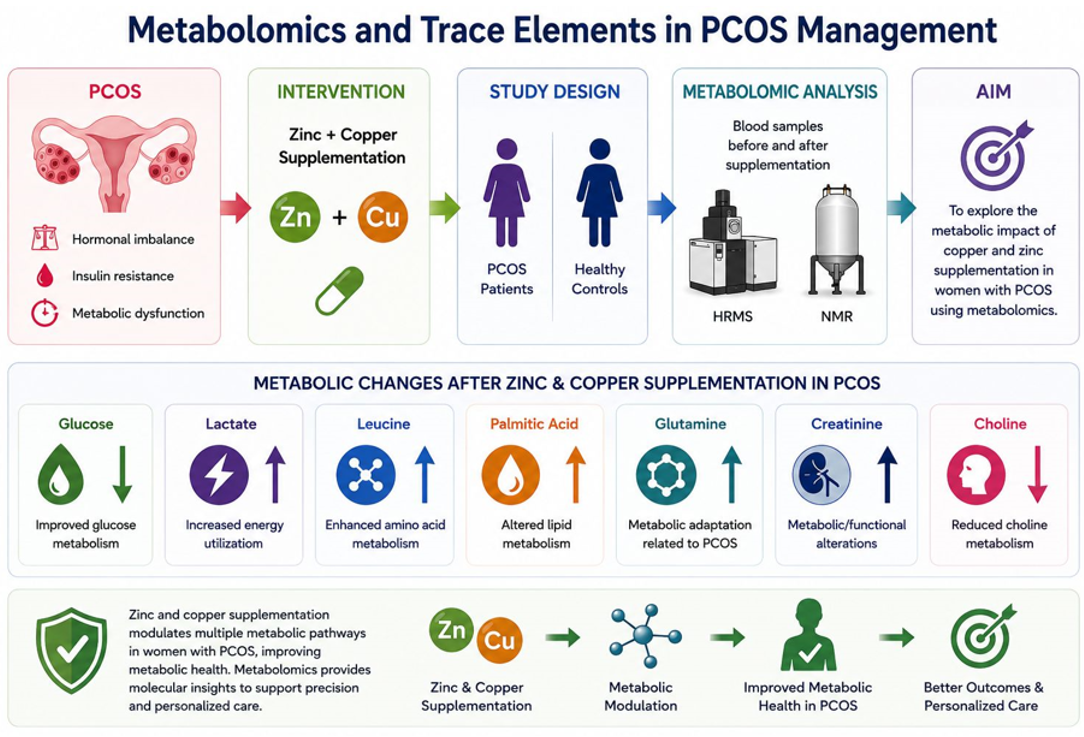
Introduction: Metabolism is a vital technique in the field of medical research. It offers an insight into the etiopathogenesis of diseases and the formulation of personalized treatment regimens. Biochemical and metabolic alterations require innovative therapeutic approaches in polycystic ovarian syndrome (PCOS). Trace elements, like copper and zinc, may help treat PCOS due to their relation to metabolism. Objective: The aim of this work was to explore the metabolic impact of copper and zinc supplementation in women with PCOS using state-of-the-art metabolomics technologies. Methods: This study included fifty PCOS patients and fifty healthy subjects. High-resolution mass spectrometry (HRMS) and nuclear magnetic resonance spectroscopy (NMR) was used for the metabolic analysis of the participants before and after obtained standard copper and zinc exposure, extracted from the blood samples of the analysis. Results: Compared with the control group, significant metabolic changes were noted post-supplementation in the PCOS patients. Fasting glucose was lower (85.2 mg/ dL to 79.1 mg/dL, p < 0.05), suggesting enhanced glucose metabolism. Higher lactate (12.5 µmol/L to 15.3 µmol/L, p < 0.05) indicated a higher energy utilization. Studies show increased levels of leucine (85.7 µg/mL to 92.3 µg/mL, p < 0.01) and palmitic acid (120.6 µg/mL to 136.2 µg/mL, p < 0.001) that mirrored alterations in amino acid and lipid metabolism. Glutamine (85.7 µg/mL vs. 78.9 µg/mL, p < 0.05) and creatinine (1.2 mg/dL vs. 0.9 mg/dL, p < 0.01) were elevated, while choline (45.8 µmol/L vs. 52.4 µmol/L, p < 0.001) decreased, highlighting supplementation's metabolic impact. Conclusion: Metabolomics showed that zinc and copper supplements could be used therapeutically to adjust PCOS-related metabolic pathways. These effects highlight the significance of metabolomics in precision medicine by allowing the introduction of customized therapeutic techniques catered to unique metabolic profiles for advanced sickness manipulation and therapeutic consequences.
Graphical Abstract