Abstract
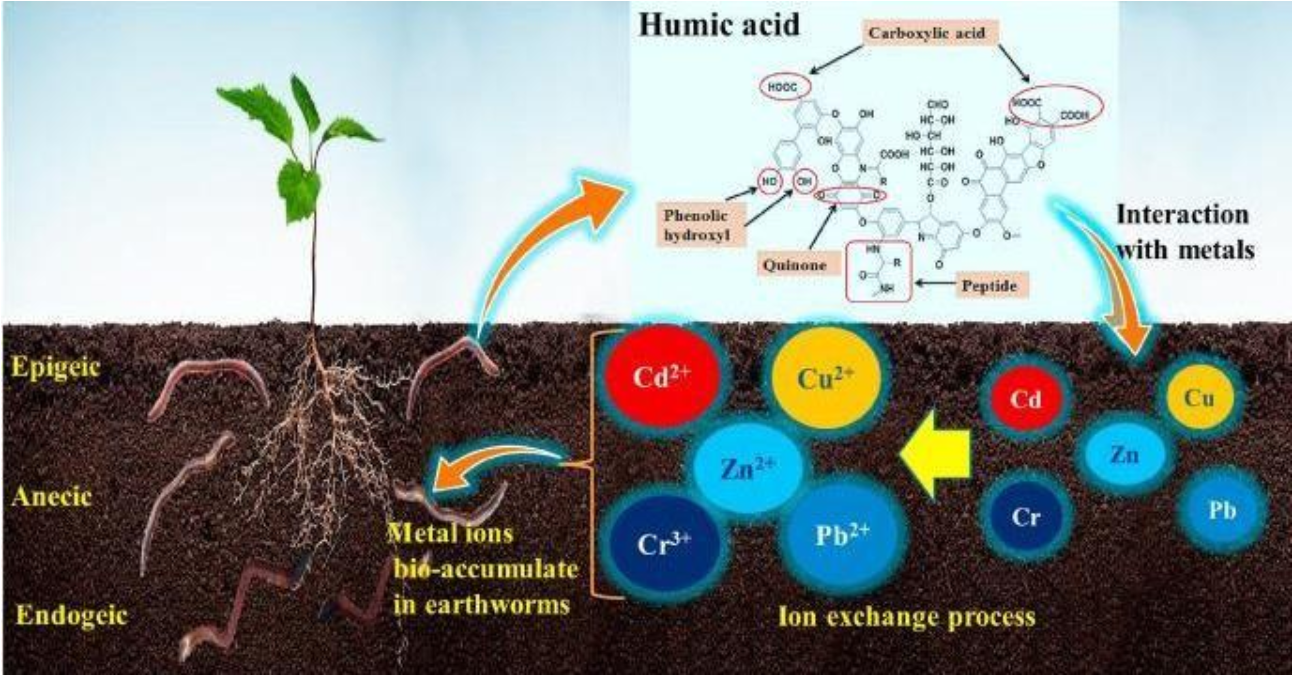
Introduction: Cadmium is classified as the fourth toxic element to humans and its presence in soil threatens the food web chain in the ecosystem, especially, human food sources. Objective: It was to apply the possibilities of biotic organisms in polluted soil and water. Methods: earthworm Amynthas morrisi was used in laboratory-controlled cadmium polluted soil/water, to investigate its ability in cadmium uptake via oral ingestion or dermal absorption, after optimizing experiments. In addition, the evaluation of using Laser Induced Breakdown Spectroscopy (LIBS) to monitor the process was conducted along with existing methods, ICP-MS, and XRF. The mortality of Amynthas morrisi in various concentrations (0, 5, 10, 15, 20, and 25 µM Cd concentration) at 15 µM Cd concentration (LC50 of Amynthas morrisi 7.5 µM Cd), was found able to do a reduction in cadmium concentration from AWW and soil after four days was recoded 7.0 and 3.0 µM Cd, respectively. Results: The cadmium accumulated amounts of cadmium (µmol) by Amynthas morrisi at the end of the experiments revealed 10.2 and 8.1 of cadmium from AWW and soil, respectively. On the other hand, the investigation of LIBS in the determination of remaining cadmium in the soil or the accumulated concentrations in soil found that LIBS is a direct method in determining cadmium in Amynthas morrisi. In conclusion, Amynthas morrisi can bioremediate cadmium from soil at 7.5 µM Cd, more studies are needed to optimize this process under various conditions. Regarding the suitable method of monitoring the process, XRF and LIBS in the current study were the first to measure the accumulated cadmium in Amynthas morrisi.
Graphical Abstract