Abstract
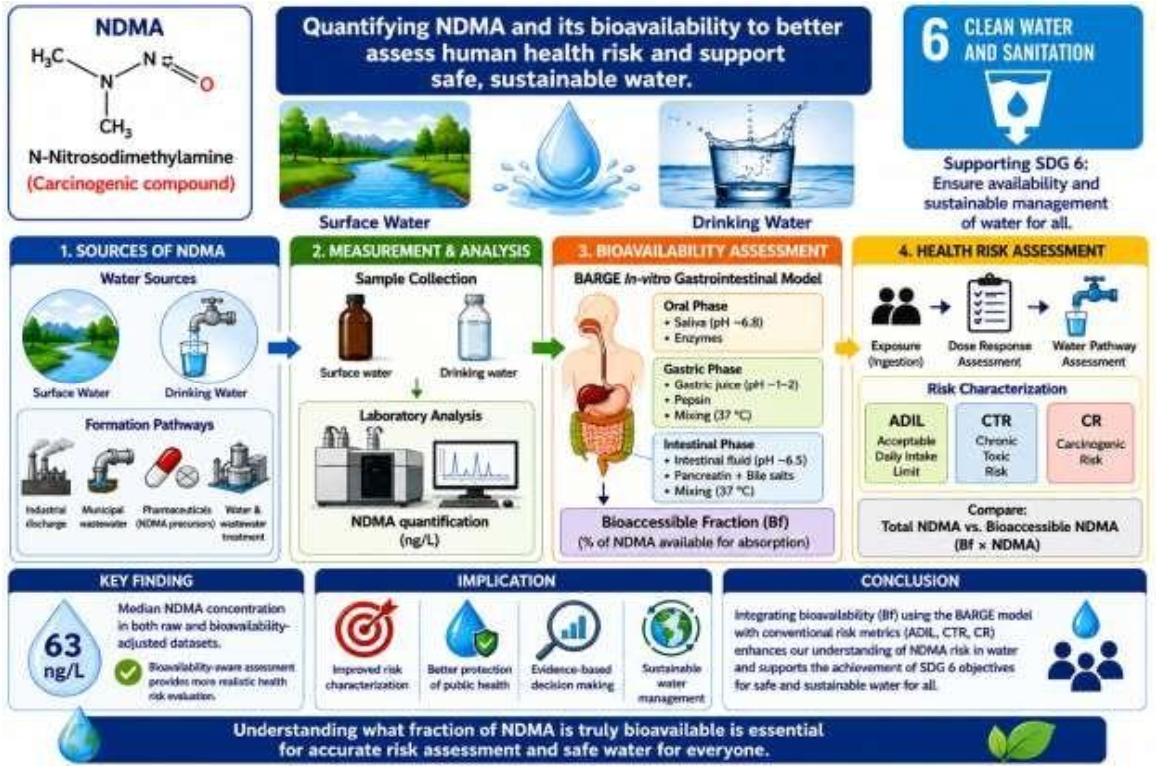
Introduction: achieving Sustainable Development Goal 6 (SDG 6) for universal access to clean water and sanitation requires integrating established chemical analysis techniques with innovative, practical assessment methods. This integration is especially critical when addressing contaminants such as N-Nitrosodimethylamine (NDMA), a recognized carcinogen that has been detected in both surface water and drinking water supplies worldwide. Although researchers have begun to employ novel analytical approaches to detect and evaluate NDMA, a significant gap remains in understanding its bioavailability—that is, determining what fraction of detected NDMA is actually accessible to the human body and thus contributes to health risk. Most existing studies limit their scope to reporting acceptable daily intake limits (ADIL), chronic toxic risk (CTR), and carcinogenic risk (CR) without delving into how much NDMA is truly bioavailable and therefore hazardous. Objective: This study aimed to bridge this gap by quantifying NDMA concentrations in both surface and drinking water, and assessing these concentrations in the context of human health risk, using both conventional and bioavailability-based evaluation frameworks. Methods: to obtain a comprehensive overview, systematically collected NDMA concentration data from peer-reviewed sources indexed in Web of Science and Google Scholar was done. After calculating mean concentration values for both types of water sources, I assessed the potential health risk by applying the Bioaccessibility Research Group of Europe (BARGE) method, which estimates the fraction of contaminants that could be absorbed by the human body. Additionally, the mean NDMA concentrations to established benchmarks, including the ADIL, CTR, and CR, was compared to determine whether detected levels represent a cause for concern when considering both total and bioaccessible NDMA. Results: the analysis revealed a median NDMA concentration of 63 ng/L, a value consistent across both raw and bioavailability-adjusted datasets. When evaluated with the BARGE method, the bioaccessible fraction of NDMA did not substantially increase estimated health risk. Both the measured concentrations and BARGE-corrected values fell below thresholds associated with significant adverse health outcomes, indicating no immediate health risk under current exposure scenarios. Conclusion: While the present findings suggest that NDMA levels in surface and drinking water do not currently pose a significant health hazard, continued vigilance is crucial. Regular and systematic monitoring of NDMA and similar contaminants remains essential—not only to safeguard public health, but also to protect aquatic ecosystems and ensure continued progress toward achieving SDG 6. Incorporating bioavailability assessments alongside traditional concentration measurements can provide a more accurate and meaningful evaluation of health risks, supporting informed policy and management decisions in the ongoing effort to secure safe water for all.
Graphical Abstract