Abstract
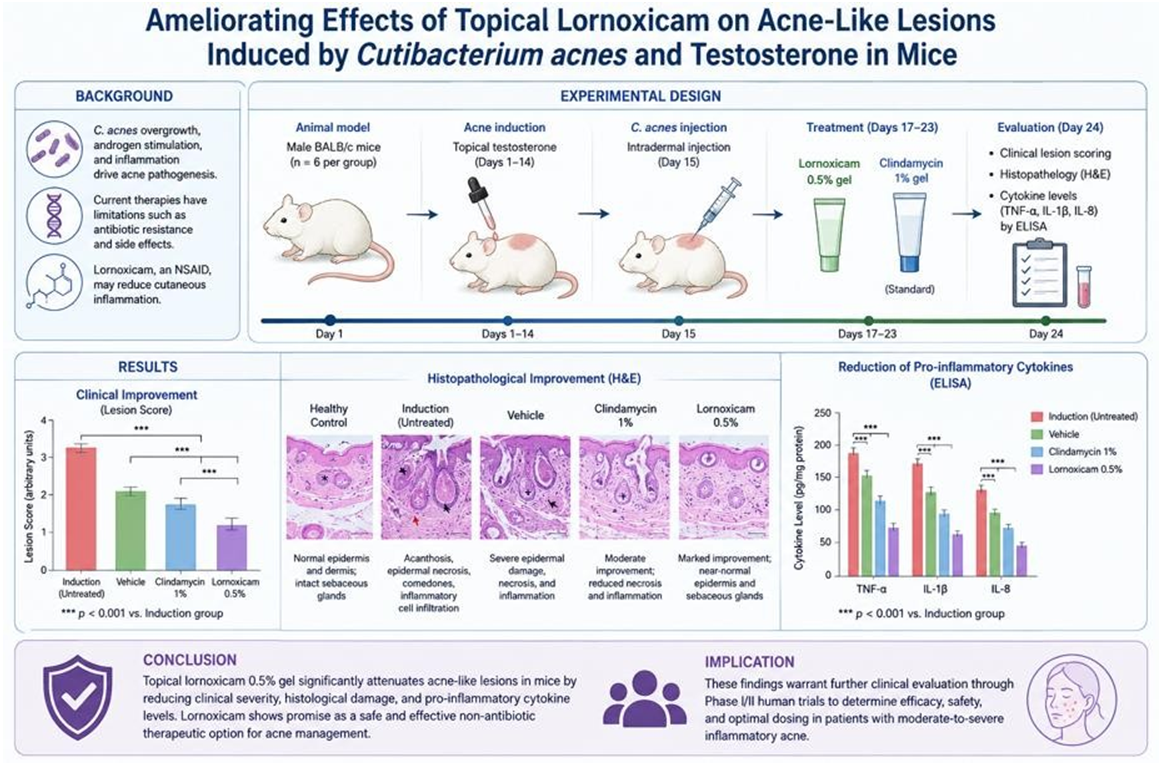
Introduction: Alternative therapeutic approaches are required for acne vulgaris, as current treatments, such as antibiotics, are less effective due to antimicrobial resistance and side effects. Objective: It was to evaluate the efficacy of lornoxicam gel as a non-antibiotic treatment, an acne mouse model was established using C. acnes and testosterone. Methods: Thirty untreated male albino BALB/c mice weighing 25-35 grams and aged 6-8 weeks were randomly divided into five groups (n = 6 per group). After a one-week acclimatization period, acne induction was initiated by applying the testosterone solution topically once daily for 14 days. On day 15, C. acnes was injected intradermally into the dorsal skin, while topical testosterone application continued to the end of the experiment. On day 17, Lornoxicam gel (0.5%) was applied once daily for one week. Clindamycin gel was applied to the standard group. H&E staining was used to evaluate histopathological changes, and ELISA was used to measure the levels of inflammatory mediators (TNF-α, IL-1β, and IL-8) in skin homogenates. Results: Lornoxicam treatment significantly reduced clinical lesion scores, histological damage, and pro-inflammatory cytokine levels compared with the untreated induction group (p<0.001). Conclusion: Topical lornoxicam markedly improves acne-like lesions, indicating new therapeutic possibilities for acne management. Further testing is required to determine its clinical significance, including Phase I/II human clinical trials to assess efficacy, safety, and appropriate dose regimens in various patient populations with moderate-to-severe inflammatory acne.
Graphical Abstract